
A new customer finishes signing up for a fintech app, reaches the verification step, and waits for the text with the code. It never arrives.
Weak signal, a filtered route, or a mistyped number, and the code is gone. The customer shrugs and abandons the app.
Multiply that by every market with patchy coverage, and a single-channel setup starts leaking signups you never see. That silent failure is where OTP verification quietly breaks. The code was fine. The delivery channel was the problem.
Most teams reach for SMS by default and never test a backup. A voice call reading the code aloud is one alternative worth knowing.
Why OTP Verification Starts With Reachability
OTP verification means sending a one-time passcode (OTP) and confirming the user types it back correctly.
The tricky part isn’t generating the code. It’s getting it to the right person, on a device they can actually use.
Most businesses solve this with SMS, and for good reason. It’s familiar, cheap, and reaches almost any phone without setup. But a default that works for most users isn’t a plan for the ones it misses. That gap is where channel choice starts to matter.
Two separate questions sit underneath every setup. Which channel reliably reaches the user, and which method gives the login the security it needs? Most guides blur those two questions together. Keeping them separate is what turns a fragile flow into a resilient one.
How SMS OTP Reaches Users, and Where It Fails
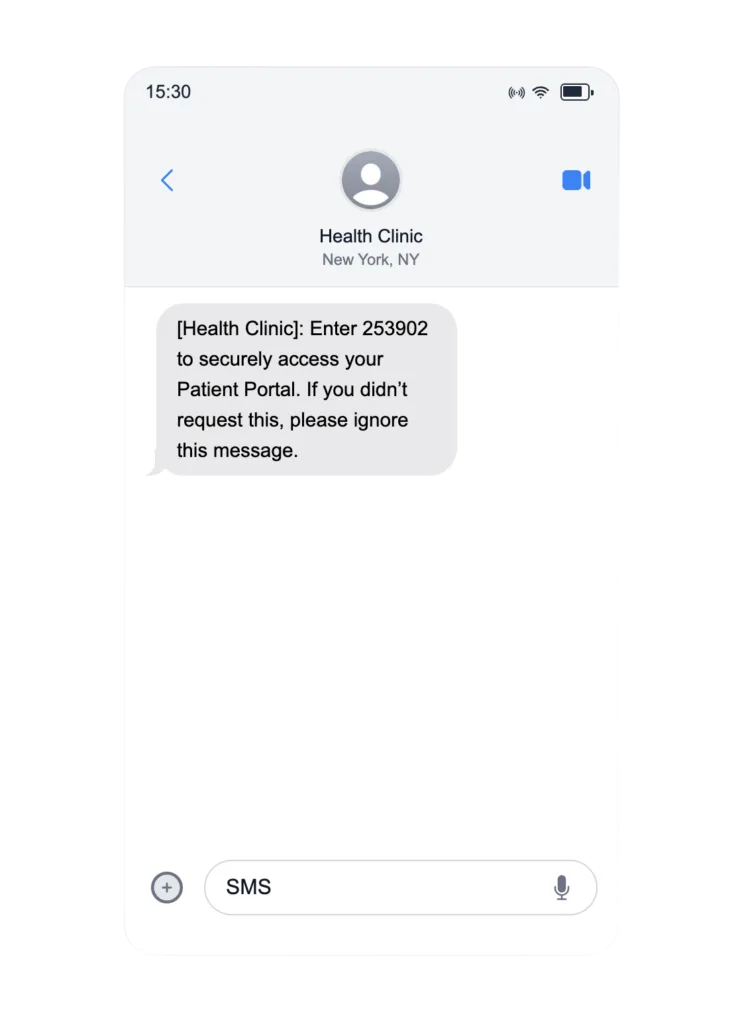
SMS OTP is popular because it’s easy. Almost every phone can receive a text, and users know the drill without any instructions. That reach is real, but it isn’t guaranteed. Texts get delayed by congestion, dropped by carrier filtering, or lost on weak mobile signals.
When a code lands after the 30-second expiry window, the user has to start over. Poor deliverability quietly drives signup drop-off. The user rarely blames the carrier. They blame your app, and some never come back to try again.
Delivery isn’t the only weak point. A SIM swap lets an attacker hijack a phone number and catch every SMS code sent to it. In the US alone, reported SIM-swap losses reached nearly $26 million across 982 complaints in 2024.
A well-configured SMS route still works for millions of logins every day. It just shouldn’t be the only channel you offer.
When Voice OTP Reaches People SMS Can’t
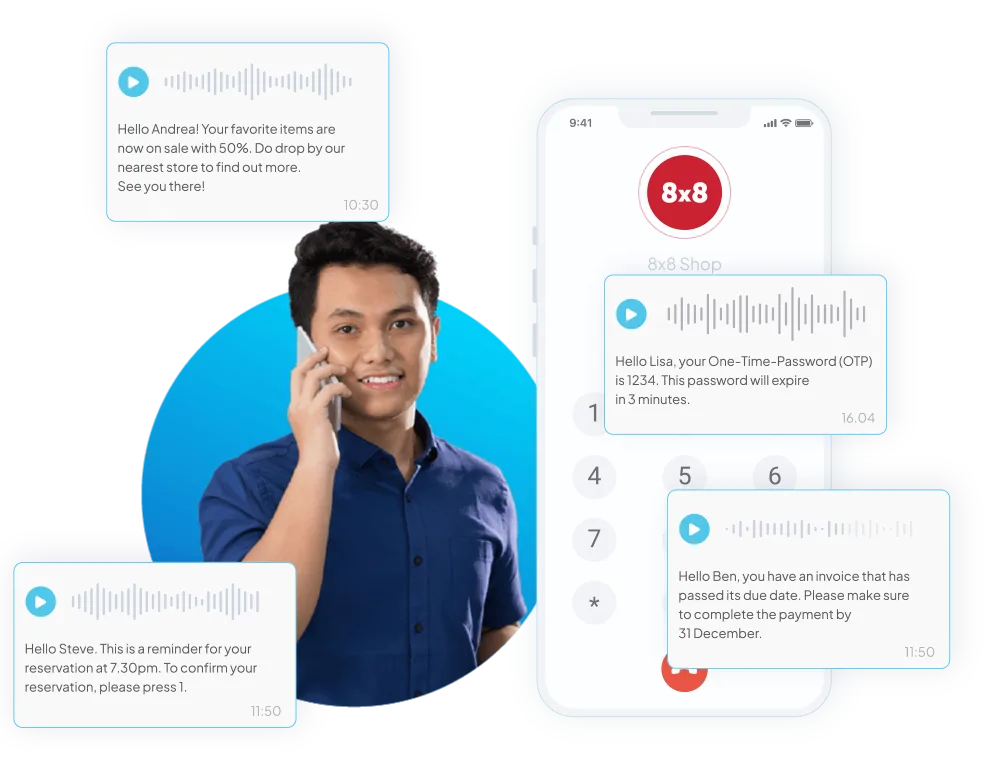
Voice OTP takes a different route. An automated call dials the user and reads the passcode aloud, digit by digit. That reaches places a text can’t. Landlines, desk phones, and older feature phones can all take a voice call. For a customer stuck on a landline or a weak data connection, that call can be the only route that works.
Voice also opens the door for users who struggle with on-screen text. A code read aloud helps people with low vision or reading difficulties.
At least 2.2 billion people live with a vision impairment worldwide, per WHO’s World Report on Vision,, a group an audible code can serve better than a screen.
Some teams call this voice authentication, and it works as a fallback when a text fails or a customer asks for a call.
Delivering that call at scale is what a service like 8×8 Voice Messaging is built for.
Voice isn’t a magic fix. Calls cost more, can hit voicemail, and sometimes get flagged as spam. The point of voice isn’t stronger security. It’s reaching someone a text would leave stranded.
The Security Question Neither Channel Answers
Many OTP guides skip this part. Choosing voice over SMS doesn’t make a login more secure.
Both travel over the public switched telephone network (PSTN), and NIST’s 2025 digital identity guidelines treat PSTN delivery of a passcode as a restricted method. Restricted doesn’t mean banned. It means you should assess the risk and offer a stronger option where the login demands it.
Regulated teams in finance and healthcare feel this most, since auditors increasingly expect a considered choice, not a default. For high-assurance cases, phishing-resistant methods like passkeys and FIDO security keys are the stronger choice, not another phone-based code.
So treat SMS and voice as delivery options, chosen for reach and access. Treat authentication strength as a separate decision.
That separation is the whole point. It keeps delivery flexible while holding the security bar where the transaction needs it.
Layering controls around the code matters more than the channel it rides on, which is the real case for strong verification.
Read More: Online banking – SMS OTP, Voice OTP, or both?
Running OTP Verification Through One API
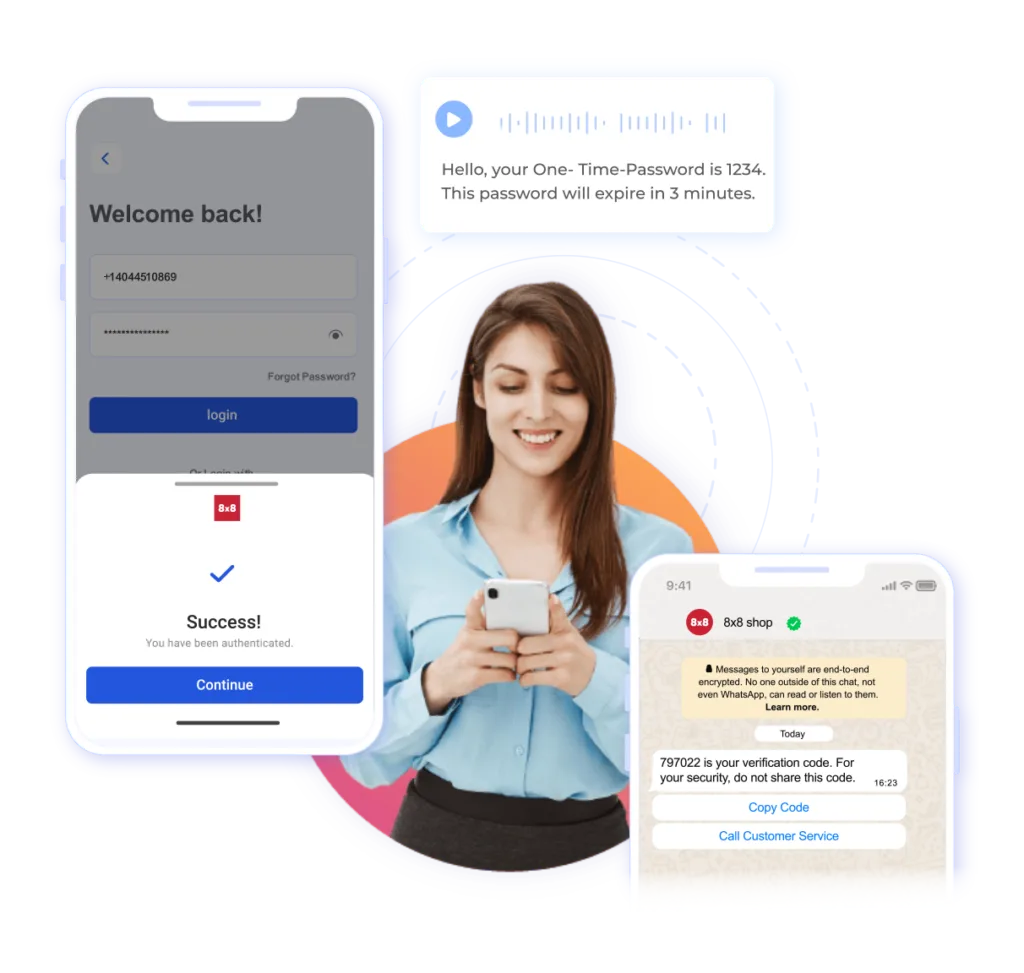
Managing SMS and voice as separate integrations gets messy fast. A channel-agnostic layer keeps the logic in one place.
8×8’s Verification API generates and validates one-time passcodes and delivers them over SMS, voice, email, or WhatsApp from a single integration.
Automatic Fallback Between Channels
8×8 documents automated fallback as part of the service, alongside Sender ID management, passcode generation and validation, and fraud monitoring.
When a preferred channel falters, the API switches to a voice message rather than leaving a new customer waiting for a text that never lands.
Real-time number validation runs alongside it, so an unreachable number is caught before a code is ever sent.
What the Voice Leg Actually Does
The voice leg reads the passcode aloud using text-to-speech, which is what makes it work for users whose screens are left behind.
It reaches traditional landlines with no internet connection at all, and it carries over 60 languages across more than 100 voice profiles.
Calls go out individually or in bulk, and recorded audio playback sits alongside text-to-speech where a fixed message suits the moment better.
Measuring Whether It Worked
Conversion analytics track message delivery, conversion rates, and overall performance, so a change in channel mix shows up as a number rather than a hunch.
Call analytics report delivery, success rates, and call duration on the voice leg, which is where a spam-flagged route becomes visible.
Billing follows the same logic. 8×8 charges for successful verifications, so a failed delivery does not become a line item.
One API makes it easy to add or switch delivery channels. It doesn’t turn a phone code into a phishing-resistant method, and it isn’t meant to.
Match OTP Verification to Your Users
The verification setups that hold up best don’t lean on one channel.
They match the delivery channel to the user, and the security method to the risk. Done that way, OTP verification stops being a single point of failure.
SMS reaches most users, voice catches the ones it misses, and stronger methods guard what matters most.
To map the right delivery mix for your users, talk to 8×8 about building verification that fits.
FAQ – OTP Verification
- What is OTP verification?OTP verification sends a one-time passcode to a user and confirms they enter it back. It proves the person has access to a trusted number or device.
- Is voice OTP more secure than SMS OTP?No. Both send codes over the phone network, which NIST classifies as restricted, so voice is a reachability option, not a security upgrade.
- When should I use voice OTP instead of SMS?Use voice when a text can’t reach the user, such as landlines, poor SMS deliverability, or customers who need a code read aloud.
- What is the most secure way to verify a user?For high-risk logins, phishing-resistant methods like passkeys or FIDO security keys beat any SMS or voice code. Match the method to the risk.
- Can one API send both SMS and voice OTP?Yes. A channel-agnostic verification API can deliver and validate codes across SMS and voice, and set one channel as a fallback for another.