If you need to send an OTP, notify a customer that their order is on its way, or promote a new product, which messaging channel should you use?
Short Message Service (SMS), Rich Communication Services (RCS) and WhatsApp Business can all support business communications, but each offers different capabilities and requirements.
SMS is a practical choice for straightforward messages and broad mobile reach. RCS adds richer, interactive experiences on supported devices and networks, while WhatsApp Business is suited to app-based messaging and customer conversations. The best choice depends on what you need to communicate, who you need to reach, how customers should respond and what each channel costs.
For businesses in Singapore, choosing a channel also means considering customer consent, platform rules and local compliance requirements. Here’s how to compare RCS vs SMS vs WhatsApp Business and decide when to use each one.
What Is the Difference Between SMS, RCS and WhatsApp Business?
SMS, RCS and WhatsApp Business all let businesses communicate with customers through messaging, but they differ in how messages are delivered and what customers can do with them.
SMS: Simple, Direct Text Messaging
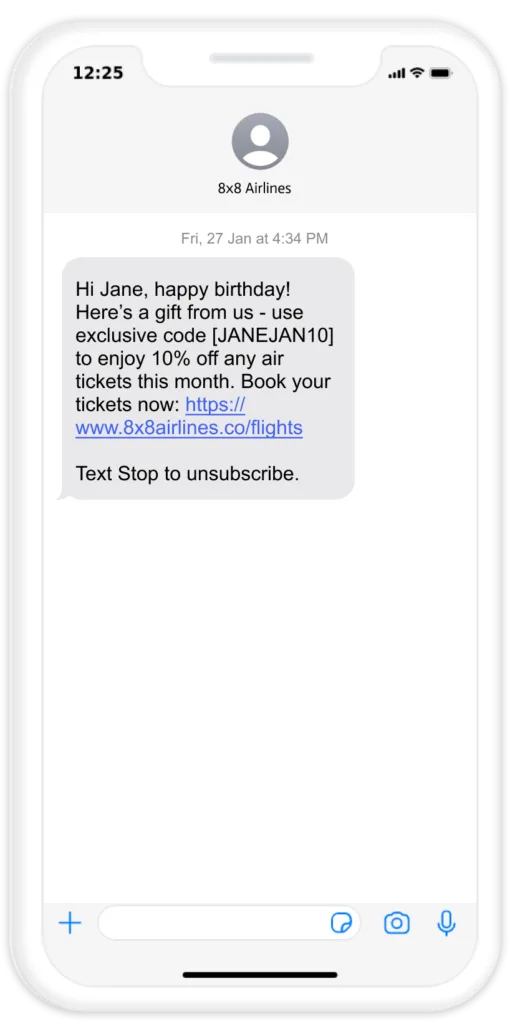
Short Message Service (SMS) sends text messages to mobile phone numbers without requiring customers to install a dedicated messaging app or use mobile data to receive the message.
Businesses commonly use SMS for one-time passwords (OTPs), transaction alerts, appointment reminders and delivery updates. Its straightforward format makes it useful when messages need to get across quickly, without requiring customers to open another app or interact with rich content.
SMS can also support two-way communication, depending on the sender setup and service configuration. However, it offers limited visual and interactive features compared to newer messaging channels. Message length, encoding and segmentation can also affect how a message is delivered and billed.
For businesses that need to send simple, direct notifications to a broad audience, SMS remains a useful starting point.
RCS: Richer, Interactive Messaging
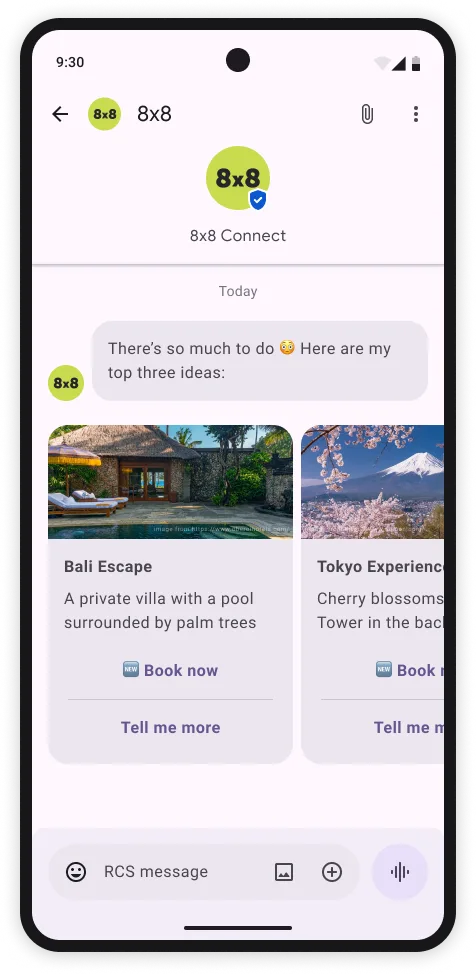
Rich Communication Services (RCS) builds on the familiar mobile messaging experience with richer content and interactive features. Through RCS Business Messaging (RBM), businesses can send branded messages that may include images, videos, carousels, suggested replies and action buttons, depending on the supported features.
For example, a retailer could send a product carousel with buttons that let customers view an item or visit a product page. A delivery company could provide an interactive update that lets customers check delivery details without having to type a reply.
RCS can also support business branding and verification, as well as delivery and read receipts, depending on the implementation.
The main consideration is compatibility. RCS availability depends on the recipient’s device, messaging app, network and market. Businesses should establish how much of their target audience can receive RCS before relying on it as their only messaging channel.
WhatsApp Business: Messaging Through a Familiar App
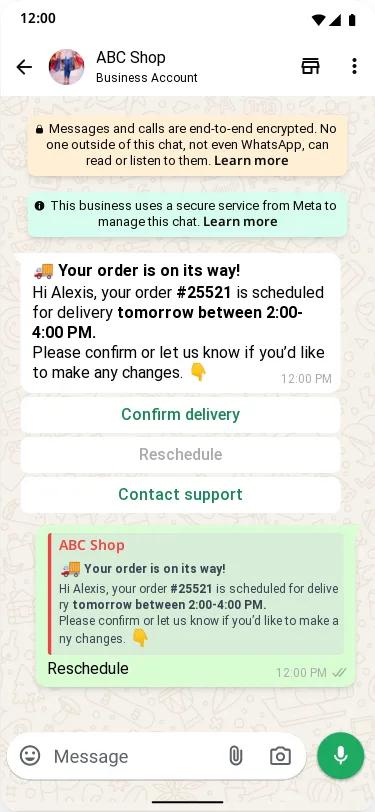
WhatsApp Business lets businesses communicate with customers through WhatsApp, using text, images, videos, documents and supported interactive message formats.
With the WhatsApp Business Platform/API, you can integrate messages into your applications, customer relationship management (CRM) systems and service workflows. This can support automated notifications, marketing campaigns and ongoing customer conversations.
For example, an online retailer might send an order update through WhatsApp, then allow the customer to ask a question about delivery. Their service team can continue the conversation within the app, rather than making the customer switch to another channel.
However, WhatsApp Business is not simply SMS delivered through an app. You must account for WhatsApp’s messaging policies, opt-in requirements, approved templates for applicable business-initiated messages and pricing rules. Your customers will also need access to WhatsApp to receive messages through the channel.
RCS vs SMS vs WhatsApp Business: How Do They Compare?
The most useful way to compare these channels is to look at what each one enables you to do, rather than assuming that a richer messaging experience is always better.
| Factor | SMS | RCS | WhatsApp Business |
| Delivery method | SMS messaging service | Compatible RCS-enabled messaging experience | WhatsApp app |
| Reach | Broad mobile compatibility; no dedicated messaging app required | Depends on device, app, network and market support | Depends on WhatsApp access and customer adoption |
| Message format | Primarily text, with links where appropriate | Rich media, branded content and interactive elements where supported | Text, media and supported interactive formats |
| Customer interaction | Replies may be supported, depending on setup | Richer interactions and suggested actions where supported | Well suited to two-way conversations |
| Branding | Sender ID options depend on market and configuration | Can support branded, verified business identities | Business identity and profile features, subject to platform rules |
| Common use cases | OTPs, alerts, reminders and concise updates | Interactive campaigns, guided actions and rich notifications | Customer support, conversational updates and engagement |
| Main consideration | Limited rich-media and interactive features | Compatibility and availability | App adoption, opt-in and messaging policies |
| Cost considerations | Depends on destination, route, message length and provider | Depends on provider, market and applicable pricing model | Depends on message category, destination and applicable platform/provider fees |
The table provides a general guide, but the right choice depends on your actual audience and communication goals. A channel’s technical capabilities do not guarantee that every customer can receive a message through it.
Read More: SMS vs WhatsApp vs RCS: Building a Multichannel Strategy
Which Messaging Channel Has the Widest Reach in Singapore?
If reach is your priority, SMS is often a practical starting point because recipients do not need a particular messaging app. However, actual delivery still depends on factors such as valid phone numbers, network conditions, sender configuration and filtering.
RCS and WhatsApp Business can reach customers effectively when those customers have access to the relevant channel. Their suitability depends on your audience, rather than feature availability alone.
Consider the differences when planning your messaging strategy.
- SMS: A broad-compatibility option
SMS is useful when you need to reach customers across different devices without requiring them to install or use a specific app. This makes it a common option for time-sensitive notifications, such as payment confirmations, appointment reminders and OTPs.
- RCS: Reach depends on compatibility
RCS can provide a more engaging experience, but not every recipient will necessarily be reachable through RCS. Before launching a campaign, assess the supported audience and whether your messaging setup can fall back to SMS when RCS is unavailable.
- WhatsApp Business: Reach depends on customer adoption
WhatsApp is useful when customers already use the app and have agreed to receive relevant business messages. It can be particularly suitable for businesses that want to combine notifications with ongoing conversations.For Singapore businesses, the practical question is not simply which channel has the widest potential reach. It’s which channel can reach your intended audience reliably while giving customers an appropriate way to receive and respond to your messages.
RCS vs SMS vs WhatsApp Business: How do the Costs Compare?
There is no universal cheapest channel. Pricing depends on the provider, destination, message type, volume and features used. A channel that costs less per message may not be the most cost-effective choice if it cannot support the interaction you need.
SMS pricing
SMS costs can depend on the destination country, messaging route and the number of message segments sent. A long message may be split into multiple segments, with the total charge reflecting the number of segments rather than just the number of messages composed.
For high-volume notifications, OTPs or reminders, compare the rates for your intended destinations and check how message length and encoding affect billing.
RCS pricing
RCS pricing depends on the provider, market and applicable pricing model. Rich media and interactive features can make it a useful option for campaigns where the customer experience matters, but you should compare the costs against the expected outcome.
For instance, an interactive product message may be more appropriate than a plain text notification if your customers need to browse options or take a specific action.
WhatsApp Business pricing
WhatsApp Business pricing depends on the applicable Meta pricing rules, message category, recipient market and any additional provider charges. Check the current pricing model and applicable template requirements before estimating campaign costs.
The cost of a WhatsApp interaction should also be considered alongside its purpose. A customer-service conversation, for example, may have different requirements than a business-initiated promotional message.
When evaluating the best messaging channel in Singapore for your business, consider more than the unit price.
- Total message cost: Include message segments, destination rates and applicable platform or provider charges.
- Reachable audience: Estimate how many intended recipients can use the channel.
- Customer response: Consider whether the message needs a reply, a click or another action.
- Operational effort: Account for integration, campaign management and customer-service requirements.
- Business outcome: Compare results against the purpose of the message, whether that is successful verification, completed delivery or customer engagement.
Check current provider pricing before making a decision, particularly if you plan to send messages at scale.
Which Channel Is Best for OTPs, Alerts and Marketing?
The right channel depends on the type of communication and what your recipient needs to do next.
| Business use case | Suggested channel | Why |
| OTPs and verification codes | SMS, or another appropriate verification method | A direct option for delivering codes without requiring a dedicated messaging app |
| Transaction and account alerts | SMS or WhatsApp Business | SMS suits concise alerts; WhatsApp may suit customers who prefer app-based updates |
| Appointment reminders | SMS, RCS or WhatsApp Business | Choose based on whether customers need a simple reminder, richer content or two-way interaction |
| Delivery updates | SMS, RCS or WhatsApp Business | SMS works for short status updates; richer channels can support tracking links and interactive actions |
| Product promotions | RCS or WhatsApp Business, where appropriate | Rich media and interactive elements can support product discovery and engagement |
| Customer support | WhatsApp Business or an integrated messaging service | Supports ongoing conversations and follow-up questions |
| Interactive campaigns | RCS or WhatsApp Business | Can offer buttons, suggested replies and other supported interactive features |
| Broad operational notifications | SMS | Useful when a straightforward message is sufficient, and app access should not be required |
These are starting points, not fixed rules. An appointment reminder may only need SMS if it contains a date, time and confirmation link. If your customers need to choose a new slot, an interactive message or two-way conversation may be more useful.
Similarly, a promotional campaign may benefit from RCS or WhatsApp Business when images, product details or interactive actions help customers make a decision. But richer content is not automatically more effective if the customer only needs a short, clear notification.
For authentication, the messaging channel should also adhere to the security requirements of that transaction. SMS-based OTPs may be appropriate in some workflows, but your business should assess whether additional or alternative verification methods are needed.
See Infographic: When to Use SMS, WhatsApp, RCS & Voice
SMS, RCS and WhatsApp Business: How Can You Build an Omnichannel Messaging Strategy?
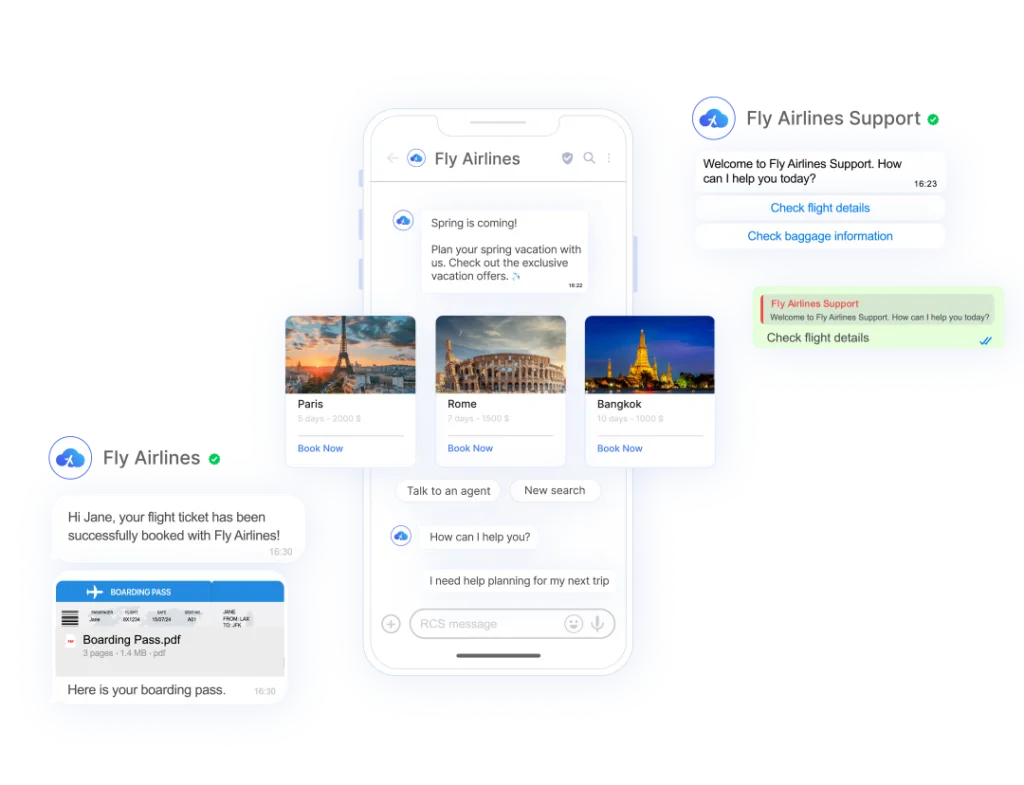
An omnichannel messaging strategy coordinates communications across channels instead of treating SMS, RCS and WhatsApp Business as competing, mutually exclusive choices.
Different customer interactions have different requirements. You might use SMS for an OTP, WhatsApp for a customer-service conversation and RCS for a product campaign. Each channel has a role, and the aim is to make the overall experience consistent.
An omnichannel approach can also include fallback routing. For example, a business may configure a message to use SMS when a preferred messaging channel is unavailable. The exact fallback options depend on the provider, channel support and implementation.
Consider an online retailer communicating with a customer from checkout to delivery.
- Order confirmation: Send a concise SMS or an update through a supported, customer-preferred channel.
- Delivery notification: Use SMS for a straightforward status update, or RCS or WhatsApp Business when richer details and interactive actions are useful.
- Customer enquiry: Let the customer ask a question through WhatsApp, with the conversation handled by the appropriate service team.
- Post-purchase engagement: Use a suitable channel for follow-up communications, taking customer preferences and applicable marketing requirements into account.
The benefit is not that customers receive the same message on all platforms. Instead, each message reaches them through an appropriate channel, with a consistent experience when they need to move from a notification to a conversation.
With 8×8 CPaaS, businesses can use 8×8 Connect to manage messaging campaigns across supported channels, while its messaging APIs enable integration into applications and automated workflows.
For customer-service teams, 8×8 Converse helps bring conversations from multiple messaging apps into a more centralised interface, so agents can access conversation history and respond without managing every channel separately.
How Can Your Business Choose the Best Messaging Channel in Singapore?
Before selecting between SMS, RCS or WhatsApp Business, work through four practical questions.
1. What does the message need to achieve?
Start with the purpose. If you need to deliver a verification code or a brief account alert, SMS may be sufficient. If customers need to browse products or choose an option, RCS or WhatsApp Business may provide a more suitable experience.
2. Can your intended audience receive the message?
Consider whether customers have access to the relevant channel. SMS does not require a dedicated messaging app, while RCS and WhatsApp Business have different compatibility and adoption requirements.
For RCS, check the supported audience and fallback arrangements. For WhatsApp Business, consider customer adoption and the requirements for initiating business messages.
3. Does the channel support the interaction you need?
A one-way notification has different requirements from a customer conversation. If recipients need to ask questions, change an appointment or choose a delivery option, consider how replies will be handled and whether the message can connect to your existing systems.
4. What are the costs and compliance requirements?
Compare pricing based on your expected volume, destination and message format. Also consider customer consent, opt-outs, data handling and the policies governing each channel.
For marketing communications in Singapore, businesses need to understand the applicable Personal Data Protection Act (PDPA) requirements, including the Do Not Call (DNC) provisions for covered marketing messages sent to Singapore telephone numbers. The requirements and exceptions depend on the circumstances, including whether clear and unambiguous consent has been obtained. WhatsApp Business also has its own opt-in and messaging policies.
A channel that offers the right features is only suitable if you can use it appropriately for the intended audience and purpose.
How Can You Run Omnichannel Business Messaging with 8×8 CPaaS?
Managing multiple channels does not have to mean building a separate process for each one. 8×8 CPaaS offers messaging capabilities that businesses can use to support different communication needs.
- SMS messaging: Send individual or bulk SMS messages, support inbound messaging where configured, and access delivery status through the SMS API, so OTPs and alerts reach customers without building that infrastructure yourself.
- RCS for Business: Create branded messages with rich media and interactive elements, so customers can browse products or tap through to checkout within the message.
- WhatsApp Business: Send supported business messages and integrate WhatsApp into communication workflows, so customers can receive order updates and ask follow-up questions in the same conversation.
- 8×8 Converse: Manage conversations across supported messaging apps in a centralised interface, so customer-service teams can respond without switching between applications.
- 8×8 Connect: Manage campaigns across supported channels and review message activity in one portal, so teams can compare performance without compiling reports from separate tools.
You can get all this with 8×8 CPaaS, from expert onboarding and dedicated local support to transparent pricing and integration with your existing systems.
With direct carrier connections, scalable infrastructure and reach across 190+ countries, 8×8 helps you bring SMS, RCS and WhatsApp Business together to reach customers through the right channels.
Still weighing RCS vs SMS vs WhatsApp Business? Talk to our experts to learn more about 8×8 CPaaS business messaging capabilities and integration options.
Frequently Asked Questions
- What is the difference between SMS, RCS and WhatsApp for business?SMS sends straightforward text messages to mobile numbers without requiring a dedicated messaging app. RCS supports richer, interactive messages in compatible messaging experiences. WhatsApp Business enables businesses to send messages and support conversations through WhatsApp, subject to the platform’s policies and requirements.
- Which messaging channel has the widest reach in Singapore?SMS offers broad mobile compatibility because recipients do not need a specific messaging app. RCS reach depends on device, app and network support, while WhatsApp Business depends on customer access to WhatsApp. Actual delivery through any channel can be affected by other technical and operational factors.
- Is RCS better than SMS?Not in every situation. RCS can support richer content, branding and interactive actions where available, while SMS is useful for straightforward messages and broad compatibility. Choose based on what customers need to receive or do.
- Is WhatsApp Business better than SMS?WhatsApp Business can be a better fit for app-based communication, rich media and two-way conversations. SMS is useful when a simple message is sufficient or you do not want to require customers to use a particular app. The right choice depends on your audience and communication goals.
- Should businesses use SMS, RCS and WhatsApp together?Yes, when each channel serves a clear purpose. For example, a business might use SMS for OTPs, RCS for interactive product campaigns and WhatsApp Business for customer conversations. An omnichannel strategy can help coordinate these communications while accounting for customer preferences and channel availability.
- Can RCS messages fall back to SMS?Fallback may be available when the provider and implementation support it. For example, 8×8’s RCS documentation describes SMS fallback when RCS is unavailable. Businesses should confirm how fallback is configured, which messages are eligible and how the resulting delivery is handled.
- Which channel is best for OTPs and verification?SMS is a common option for delivering OTPs because it does not require a dedicated messaging app. However, the best verification method depends on the sensitivity of the transaction, security requirements and customer access. Businesses should assess whether SMS or another authentication method is appropriate for their use case.