
Credential abuse was the single most common way attackers got in for years running, and it still shows up in 39% of breaches, though vulnerability exploitation overtook it as the top initial access vector at 31% in Verizon’s 2026 Data Breach Investigations Report.
That’s the job in one line. Keep attackers out at internet scale, and still let a real customer sign in without thinking about it.
Workforce identity and access management (IAM) secures employees who have to log in. Customers don’t have to, and every extra step is one they can walk away from.
Customer Identity and Access Management (CIAM) is the identity layer in front of your apps, sites, and portals. It governs how a customer registers, logs in, and is managed.
What Customer Identity and Access Management Really Covers
CIAM brings several jobs into a single layer. Registration and login, identity verification at onboarding, consent capture, account recovery, and defense against account takeover all sit together.
Buy them as separate tools and you own the seams. Those seams, not the products, are usually where risk gets in.
The real question, then, is not what CIAM is. It’s how to judge one approach against another and match it to what the business actually needs.
Read more: How CIAM Drives Business Success: Benefits for CX & Best Practices
Core CIAM Capabilities to Evaluate
Four capabilities do most of the separating. Weigh each against your own risk and customer experience, not against a vendor’s feature grid.
Single Sign-On and Federation
Single sign-on (SSO) lets a customer move across every one of your apps with one login. Ask how it federates with your identity providers through standards like OIDC and SAML.
Getting single sign-on right also shapes how multi-factor authentication (MFA) layers on top, so evaluate them together.
Multi-Factor and Adaptive Authentication
Strong multi-factor checks are table stakes, but a blanket prompt on every login costs conversions. Look for risk-based authentication that steps up only when signals warrant it.
Passkeys build on interoperable public-key credentials, removing the shared password attackers reuse in account takeover attempts.
Lifecycle and Consent Management
Identity does not end at login. Lifecycle covers profile updates, role changes, offboarding, and the consent records you must capture, prove, and withdraw on request.
In APAC, this gets sharper. Each market, from the Philippines’ Data Privacy Act of 2012 to India’s DPDP Act, sets its own consent and residency rules, so per-market policy is a real buying criterion.
Scalability and Reliability
Consumer login is spiky and revenue-critical. A sales spike or campaign can flood the system, and an outage locks out paying customers.
Ask hard questions about peak load, resilience, and how the approach holds up under real APAC traffic patterns, not a synthetic benchmark.
Read More: Secure Customer Authentication with CIAM
Build Versus Buy and Integration Reality
Every enterprise hits the same fork: build identity in-house, or buy a purpose-built platform. The honest answer depends on engineering capacity and appetite for maintenance.
The CIAM market is growing quickly, for a reason worth naming: identity has moved from a back-office function to a system that carries digital revenue.
Homegrown identity looks cheap at first. It rarely stays that way once passkeys, bot defense, breach-notification timelines, and per-market consent all land on the same small team.
Buying is not free of work either. A bought platform still has to plug into your apps, CRM, and fraud tools through open standards.
It also has to migrate an existing user base, password hashes and consent history included, without forcing a mass reset customers will notice.
Matching a CIAM Approach to Enterprise Needs
With criteria in hand, most enterprises weigh three broad approaches. The right fit depends on your risk profile, in-house skills, and how fast you need to move.
- Extend workforce IAM: Reuse an existing employee identity system for customers. It starts fast but often strains under consumer scale and experience demands.
- Build in-house: Full control and deep customization, at the cost of ongoing security, compliance, and uptime work your team owns forever.
- Buy a purpose-built platform: Identity, consent, and fraud controls maintained for you, so the team ships product instead of patching login.
For most APAC enterprises weighing enterprise identity management, what usually decides it is speed to a secure, compliant login without a standing maintenance burden.
That calculus is sharper here than anywhere. Asia Pacific is the fastest-growing region for CIAM, and the drivers are visible in everyday consumer behavior.
Digital banking, e-commerce, and government e-services all reach a mobile-first population, and in the Philippines that runs from GCash and Maya wallets to Shopee checkouts. Everyday digital services now set the login standard consumers expect.
A strong evaluation also weighs fraud prevention alongside experience, since account-takeover defense and login usability shape the same decision.
Where 8×8 Descope CIAM Fits
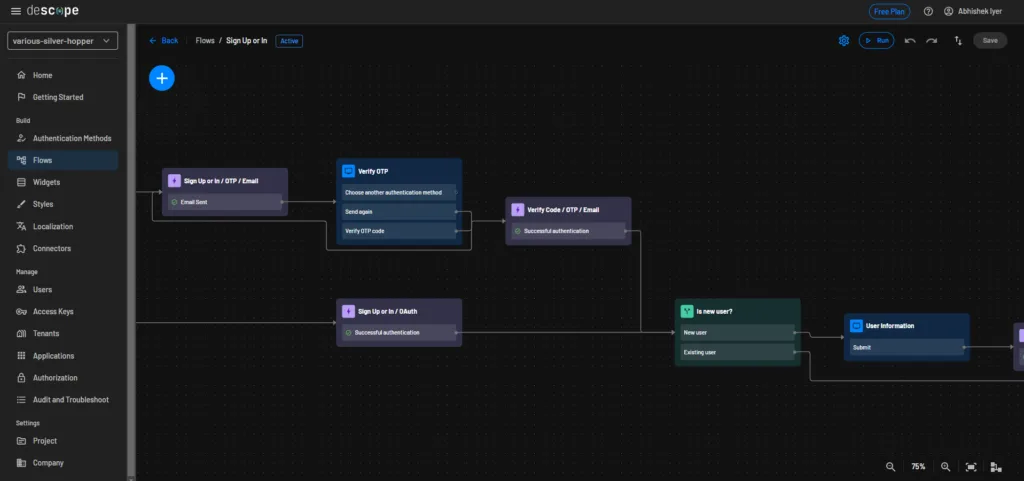
For APAC enterprises on the purpose-built route, 8×8 Descope CIAM brings those four criteria into one platform: SSO, adaptive authentication, lifecycle and consent management, and APAC-scale reliability.
Descope signs customers in with passkeys, magic links, social logins, biometrics, or one-time passcodes, taking the reused password out of the login path.
Federation routes customer identities across separate customer-facing apps and identity providers, while risk-based multi-factor authentication adds step-up controls and bot protection only where the risk warrants it.
On the lifecycle side, it adds SSO, SCIM, and delegated administration, and holds one source of truth for customer identities across every app.
Authentication augmentation is the part that answers the build-versus-buy question: it strengthens existing flows without replacing the identity provider or user store already in place.
A drag-and-drop canvas with third-party connectors assembles and changes those journeys, which keeps a change to the login path off the engineering backlog. That matters next to an approach built on custom code: a visual change here ships in hours, not a sprint, and account-takeover defenses are included rather than a paid add-on bolted onto a workforce-identity base.
For onboarding and step-up moments, pairing it with a verification API can add mobile checks, such as an SMS or Viber one-time passcode, where a higher-risk action calls for more assurance.
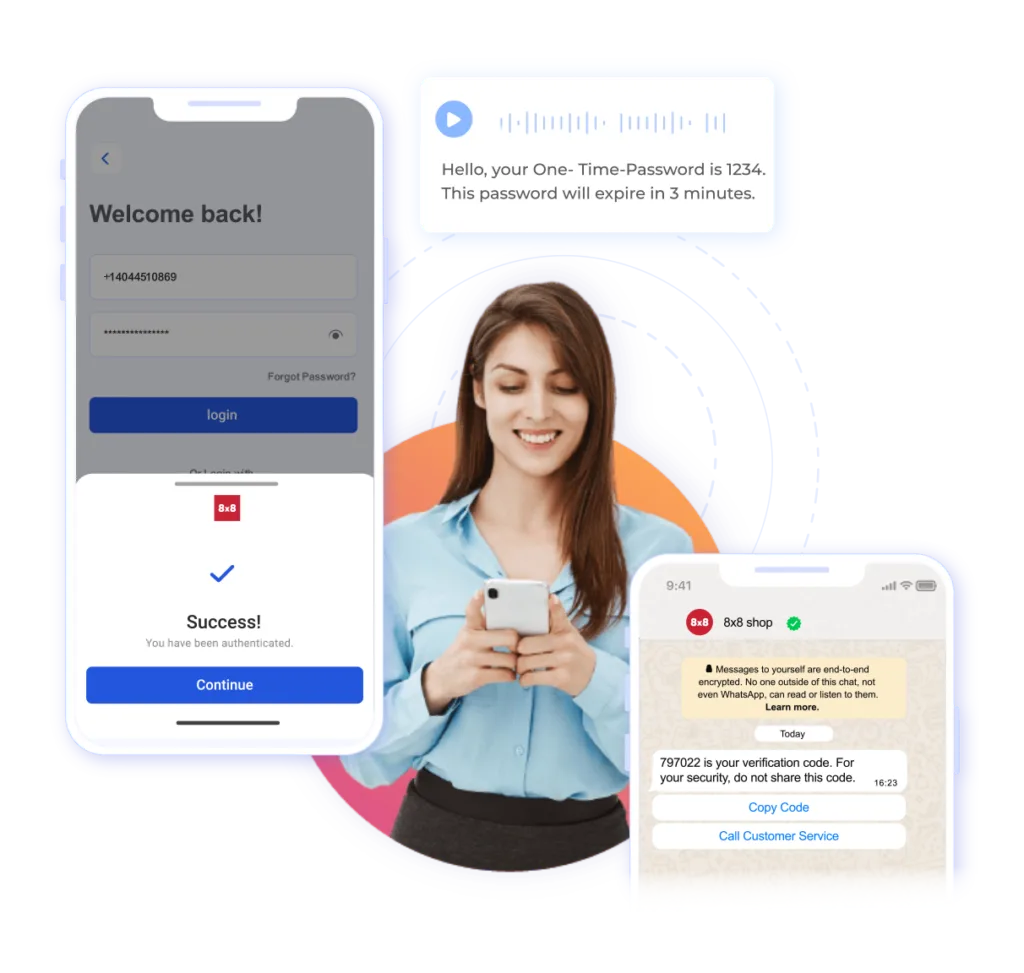
It also sits alongside 8×8’s fraud prevention tooling, so SMS fraud signals can adjust an authentication flow while it is running rather than after the fact.
Two things are worth pinning down before you commit: consent capture and withdrawal in each APAC market you serve, and how an existing user base moves across.
Ask what happens to existing password hashes and consent history, and what customers would notice on the day.
Consider a Philippine digital bank with APAC customers, checking whether a single approach can carry its authentication options, consent records, and regional duties across every app.
That’s the kind of test 8×8 Descope CIAM is built to handle, without a homegrown identity team carrying the load.
Choosing Customer Identity and Access Management With Confidence
A CIAM decision is really a business decision. When capabilities, build-versus-buy fit, and APAC compliance all line up, identity shifts from liability to competitive asset.
Strong customer identity and access management helps protect revenue and trust at the same time, which is exactly what an enterprise buyer is trying to buy.
Talk to 8×8 to map your APAC compliance requirements onto a Descope configuration — and get a migration plan for the user base you already have.
FAQ — Customer Identity and Access Management
- What is customer identity and access management?It’s the identity layer that manages how customers register, log in, consent, and are secured across their lifecycle. CIAM is distinct from workforce IAM, which secures employees.
- What capabilities should a CIAM solution include?Look for single sign-on, multi-factor and adaptive authentication, lifecycle and consent management, scalability, and account-takeover defense. Weigh each against your own risk and experience.
- Is it better to build or buy CIAM?Buying suits most enterprises, since in-house identity carries ongoing security, compliance, and uptime costs. Build only if you can maintain it long term.
- How does CIAM support APAC compliance?A capable approach configures consent, withdrawal, and data residency per market, from the Philippines’ Data Privacy Act of 2012 to India’s DPDP Act. Confirm country rules with local advisers.
- How does CIAM differ from enterprise identity management?CIAM secures external customers at internet scale with low friction, while enterprise identity management often centers on employees. The scale and priorities differ.